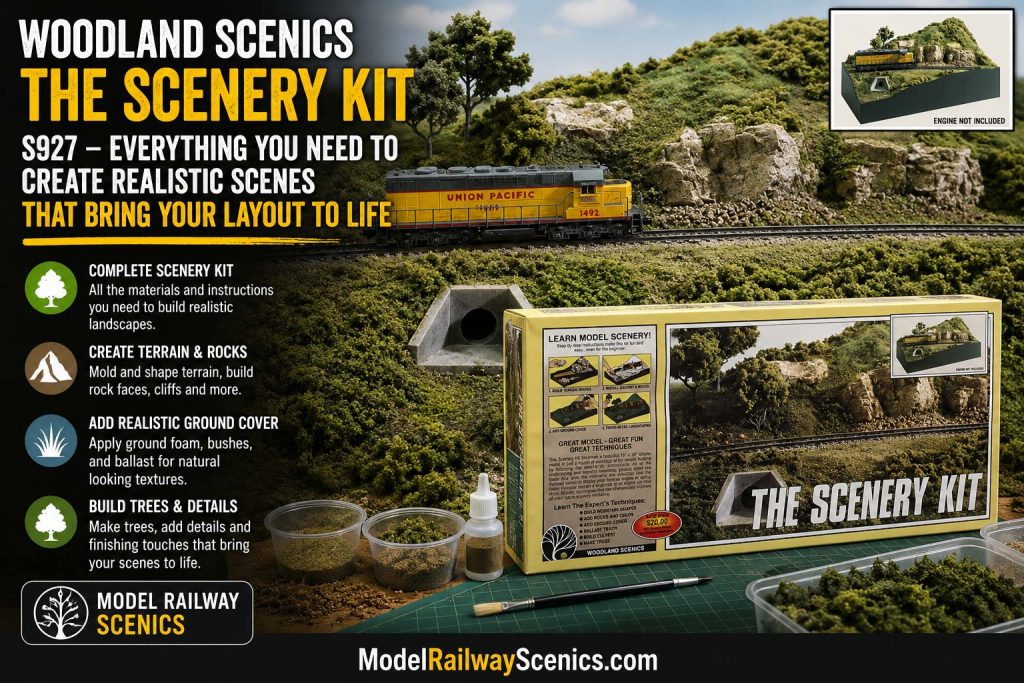
Woodland Scenics Clump Foliage is the trusted choice for realistic shrubs, bushes, and tree canopies across every modelling scale. It’s up there with my favourite scenic materials as it gives great results in double quick time. And we’re all short on time!
Colourfast, lightfast, and easy to work with, it’s available in a full range of colours and bag sizes to suit any layout or diorama. Whether you’re building a lush summer forest or a huge embankment. Or a crisp autumnal scene, there’s a variant here that’ll do the job beautifully.
- The Foliage That Just Looks Right
- What Makes It Different?
- What’s It Used For?
- How to Apply It
- The Full Range — All 10 Variants
- A Few Honest Thoughts
- Where To Buy
The Foliage That Just Looks Right
If you’ve spent any time trying to make model trees look convincing, you’ll know the struggle. We’ve all been there. Some foliage just doesn’t look right as the colours are far too bright to actually look realistic. Lichen (albeit a little old skool now) looks brilliant for six months and then starts to go a bit crispy. Homemade solutions involving sponge and paint, whizzed up in the kitchen blender, can work well, but there’s a risk of it just not looking right after you’ve spent a whole day trying to get the perfect shade. And you have to explain to the other members of the household why everything they put in the blender comes out a dodgy shade of green!
It’s one of those areas of the hobby where the gap between “good enough” and “actually convincing” can be surprisingly wide. That’s where Woodland Scenics come in.
Woodland Scenics Clump Foliage is, genuinely, one of the products that closes that gap. It’s been a staple of the scenic modelling world for good reason — not because of any clever marketing, and it’s certainly not the cheapest, but because it works. The clumped ground foam has an irregular, porous texture that mimics the way real foliage actually grows: unevenly, organically, with natural variation in density. And it’s an absolute doddle to work with.
I’ve used it on everything from small diorama projects to larger layout builds, and it’s one of those materials I always keep a bag of in stock. You find uses for it you weren’t expecting. Which is usually the sign of a good product.
What Makes It Different?
The honest answer is: a combination of small things that add up. The material itself is a high-quality ground foam, and the key practical advantage over natural alternatives like lichen is that it doesn’t degrade. Real lichen dries out. It becomes brittle. Over time, layouts built with it start to look a bit sad. Woodland Scenics’ foam doesn’t do that — it holds its shape and colour over the long term.
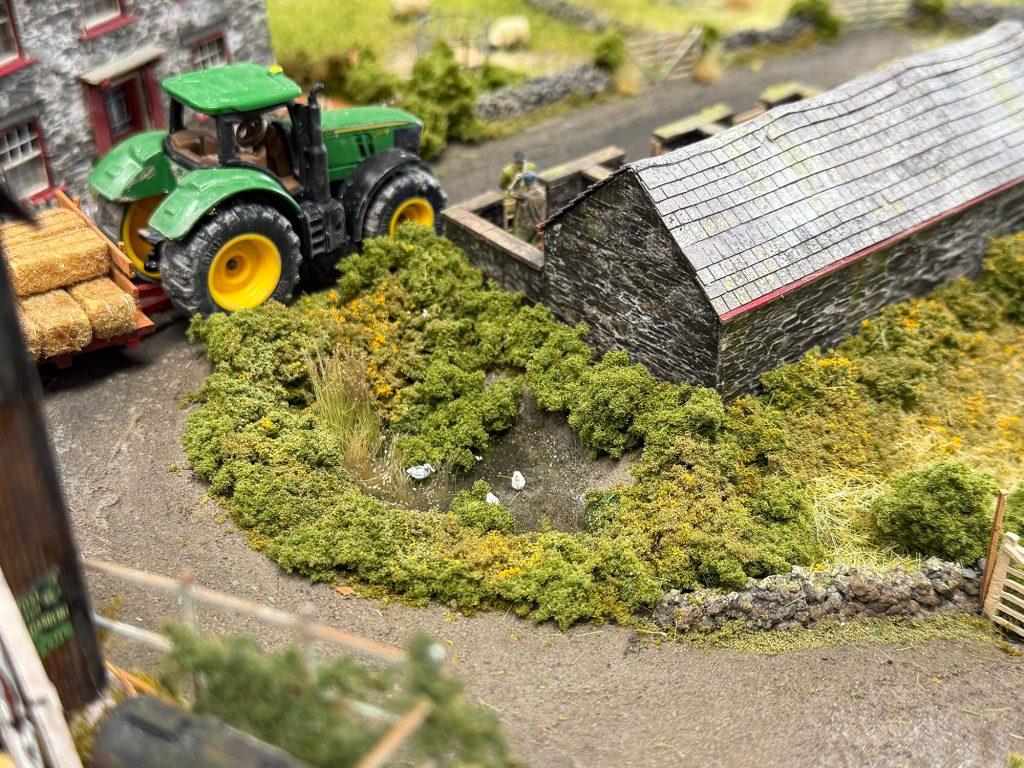
I’ve said it before, but it’s worth reiterating, this stuff is both colourfast and lightfast, so the foam can withstand a good amount of UV exposure, which matters more than people think if your layout or diorama lives anywhere near a window. A lot of cheaper alternatives go dull or patchy after a year or two.
The texture is also genuinely well thought-through. The clumps range from roughly 3mm to 38mm, which means you get natural variation straight out of the bag. The small clumps are perfect for the edges of paths, scattering around a field or using in an urban garden scene. The larger clumps are great for unkempt hedges etc. And because the foam is pliable rather than rigid, you can pull pieces apart, tear them into finer chunks, or glue chunks together to form larger bushes. It’s also great for use with their plastic tree armatures as well as homemade wire armatures. It’s a very forgiving material to work with, which makes it beginner-friendly without being limiting for experienced modellers.
It’s compatible across all modelling scales — N, HO, OO, O, G — so whatever you’re building, there’s a variant here that’ll suit the scene.
What’s It Used For?
- Tree foliage: Applied to wire or plastic armatures to build full, convincing canopies for deciduous or evergreen trees.
- Shrubs and bushes: Pressing clumps directly onto glued surfaces (PVA or Woodland Scenics Glue) to create dense ground-level growth and hedgerows.
- Ground cover transitions: Filling the awkward middle ground between open fields and forest edges, or covering hillside terrain. And for adding a little extra texture to a grass verge where it meets a dry stone wall.
- Overgrown scenery: Adding that convincingly neglected look to abandoned buildings, old sidings, or derelict industrial scenes.
- Vines and creepers: Tearing clumps into thin strands and draping them up walls, fences, or bridge supports for climbing plant effects.
- Hiding seams and edges: Masking the joins between scenery sections, the bases of buildings, or the edges of pre-made scenic pieces.
- Tabletop wargaming terrain: Building scatter terrain, forest bases, and battlefield scenery for wargames and roleplaying setups.
- Dioramas and display models: Adding natural detail to military dioramas, figure displays, and scale model vignettes.
How to Apply It
The application method varies a little depending on what you’re doing, and it’s worth being deliberate about adhesive choice here — that’s one area where people sometimes run into trouble.
For bushes and ground cover, the simplest approach is to apply Woodland Scenics Scenic Glue directly to your layout surface, press the clumps of foliage gently into it, and leave it to dry. Straightforward enough. The key thing is to work in manageable sections rather than gluing too large an area at once, so you’re not racing to place foliage before the adhesive starts to skin over.
For trees, Hob-e-Tac is the recommended product. Apply it to the branches, then wait. The instructions say 20 to 45 minutes, which feels like a long time the first time you do it, but you’re waiting for it to turn clear and become properly tacky. Once it’s there, you break the Clump Foliage into small pieces and pinch them firmly onto the branches. The tacky adhesive grabs the foam and holds it securely in a way that standard PVA simply won’t. I’ve seen plenty of people report clumps falling off trees over time, and in almost every case, it comes down to using the wrong glue. Worth noting.
Once everything is placed and dry, a light mist of Scenic Cement over the finished foliage locks it all in place and adds long-term durability. Use a fine sprayer and don’t drench it — a light pass is all it needs.
One practical note: it sheds a bit during application. Small foam bits end up on the baseboard, on your clothes, and occasionally on the cat. Have the vacuum to hand (if you have a Model Vac to hand, you can use it to collect up the loose bits and used them as scatter… Bonus!). It’s not a dealbreaker though, just something to be aware of.
The Full Range — All 10 Variants
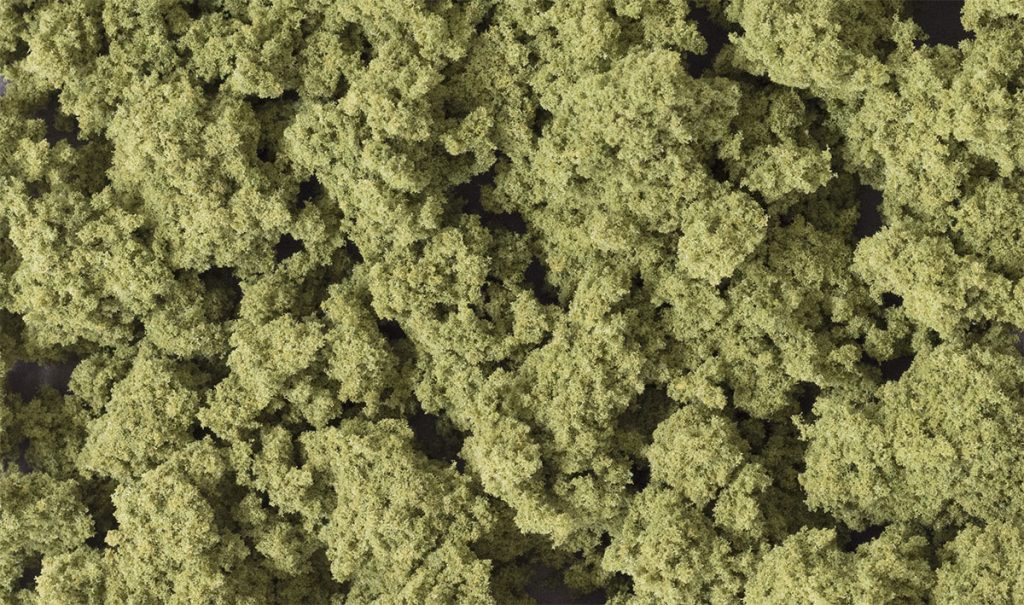
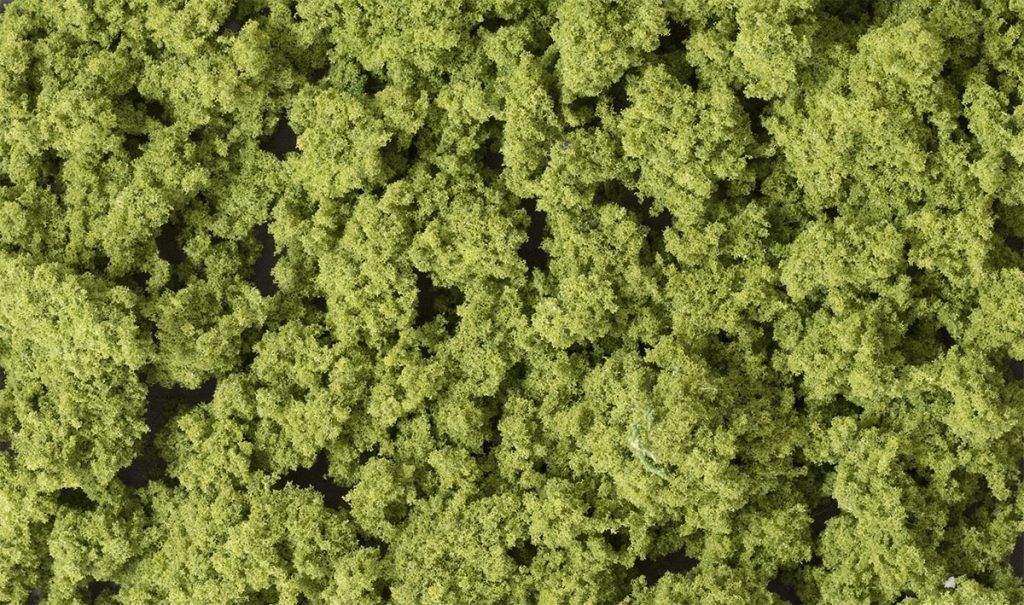
Clump Foliage comes in two bag sizes — a large bag at 173 cubic inches (2.83 dm³) and a smaller bag at 55 cubic inches (0.90 dm³) — across a useful spread of colours covering every major season and habitat type. Here’s the full rundown:
- FC181 — Burnt Grass (Large Bag)*: A dry, straw-toned colour ideal for arid landscapes, late-summer scenes, or drought-stressed ground cover. Works brilliantly for parched hillsides and scrubland.
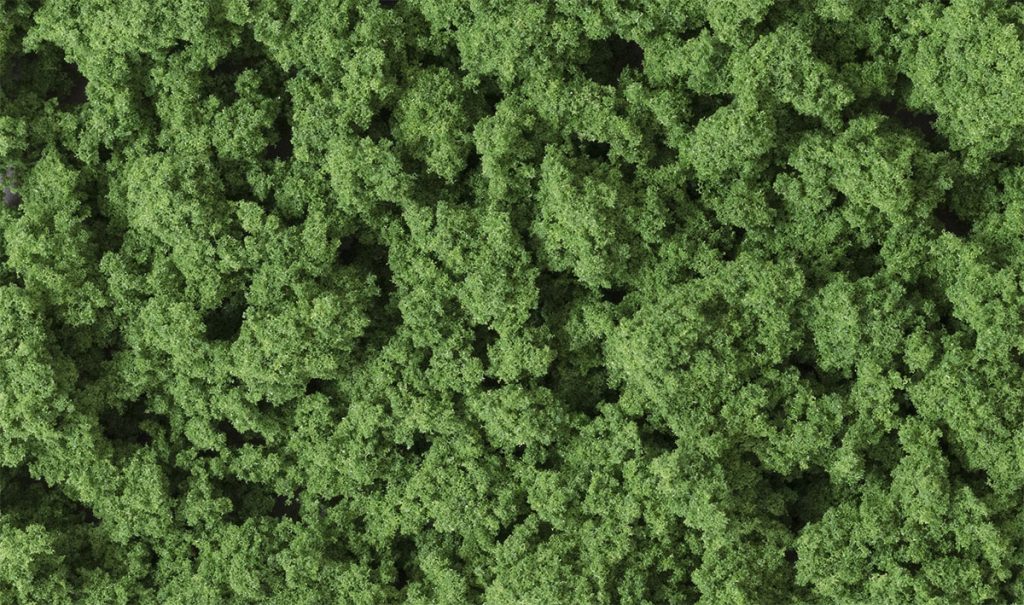
- FC182 — Light Green (Large Bag)*: A fresh, bright green representing new spring growth. Use it for highlight areas on bushes and trees, or early-season scenery where everything’s just come back to life.
- FC183 — Medium Green (Large Bag)*: The versatile workhorse of the range. A solid temperate summer green that works across a huge range of scenes. If you’re only buying one large bag, this is probably the one.
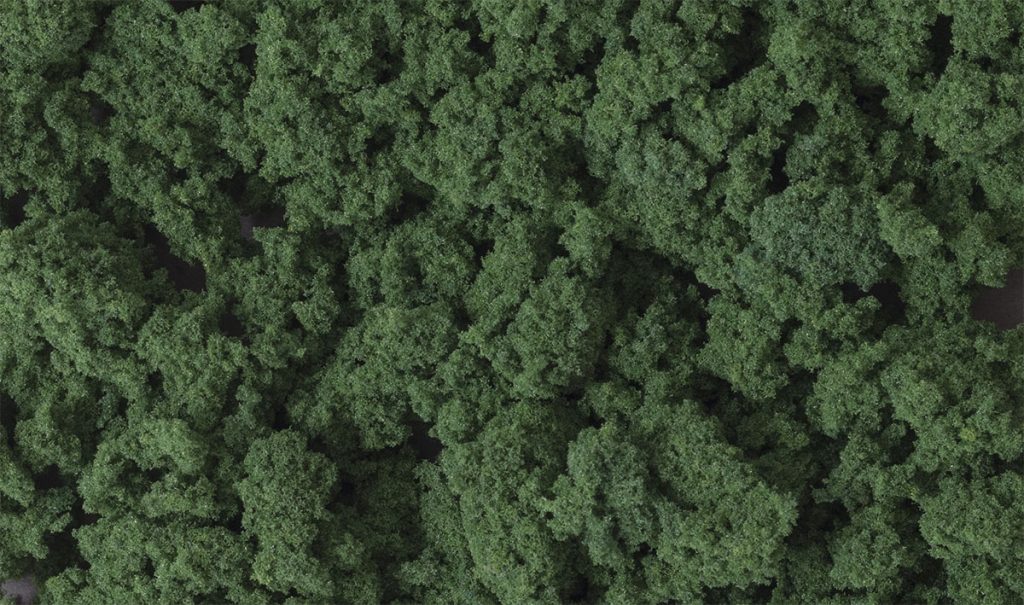
- FC184 — Dark Green (Large Bag)*: Deep, rich green for mature summer growth, forest interiors, and shadows beneath canopies. Pairs brilliantly with medium green to add depth and variation.
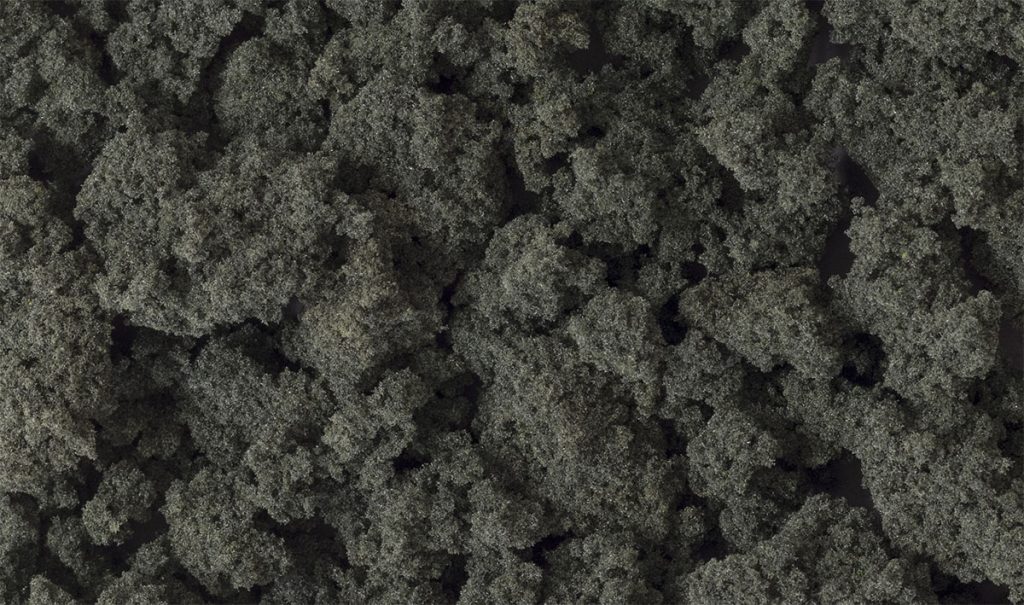
- FC185 — Conifer Green (Large Bag)*: Specifically tinted for pine, fir, and other evergreen species. That distinctive blue-green tone that sets conifers apart from deciduous trees — and it really does make a difference to the finished result.
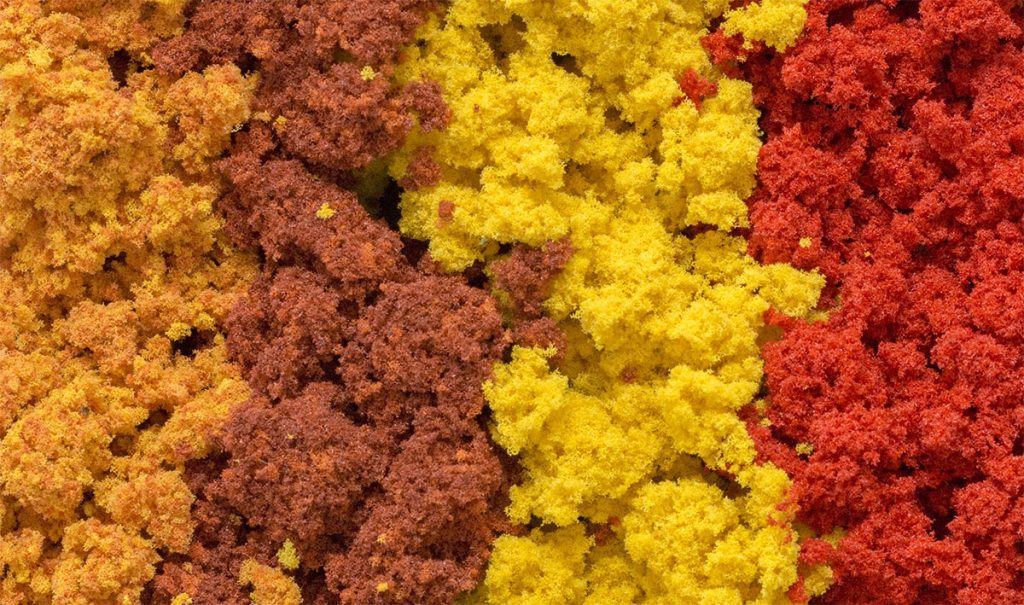
- FC186 — Fall Mix (Large Bag)*: A blended mix of oranges, reds, and yellows for autumn woodland scenes. One of the most visually striking of the range, and a favourite for diorama work.
- FC682 — Light Green (Small Bag)*: The same fresh spring-growth colour as FC182 in a smaller 55 cu. in. quantity — ideal for smaller dioramas or for supplementing a larger build with targeted highlights.
- FC683 — Medium Green (Small Bag)*: The standard workhorse medium green in a smaller quantity, perfect for focused landscaping areas or smaller-scale projects where a full large bag would be overkill.
- FC684 — Dark Green (Small Bag)*: The deep forest green in a compact size, great for adding shadow and depth to specific patches without committing to a full large bag.
Between the two bag sizes and the range of colours, there’s a sensible logic to how the range is structured. The large bags make sense for bigger layouts where you’ll be covering significant ground. The small bags are well-suited to dioramas, wargaming terrain, or topping up a specific colour without building a stockpile. Worth thinking through what your project actually needs before you order — it’s the kind of material that’s easy to over-buy on the greens and under-buy on the specialist colours like Conifer Green or Fall Mix.
A Few Honest Thoughts
No product is without its considerations, and in the interest of being useful: on very large layouts, the cost of multiple large bags can add up. If you’re covering an enormous hillside, it’s worth thinking about whether a combination of Clump Foliage for the visible surface and a cheaper bulk filler beneath makes more sense economically. That said, the quality-to-result ratio is genuinely strong — this isn’t a case of paying a premium for a marginal improvement.
The other thing worth saying is that mixing colours almost always produces better results than relying on a single shade. Real vegetation isn’t one green. Layering Dark Green with Medium Green, or running a few Light Green highlights across the top of a bush, gives you that natural variation that reads as believable. The Fall Mix is particularly effective when combined with a little Dark Green in the shadows — it stops the autumnal colours from looking too uniform.
As a material, it’s approachable for beginners and genuinely useful for experienced modellers. That combination is rarer than you’d think.
Where To Buy
Ready to get a bag or two in? Below you’ll find links to the best places to pick up Woodland Scenics Clump Foliage across the full range of colours and sizes.
Buy it online now at Scale Model Scenery
Shop Woodland Scenics Clump Foliage on eBay